Six Mistakes I Watch First-Time Buyers Make With Galvanized Square Tube, And What Each One Costs
Oct 30, 2026
A buyer in Nairobi emailed me in March with a simple question: he had two quotes for the same 100x100 tube, one at $612 a tonne and one at $650, and he wanted to know why. I asked him to send me the other supplier's specification sheet. It said "pre-galvanized." Mine said hot-dip finished, Z275. He took the cheaper quote, and in September I got a photo of his fence frame with orange streaks running down every post. That conversation cost him a repaint, a wet season, and whatever patience his own client had left. It also taught me that the expensive mistakes in this trade are almost never made by people buying their twentieth container. They are made on the first order.
So here are the six mistakes I watch for, in the order they usually happen. None of them needs a laboratory or an engineer. Every one of them costs more to fix after the ship sails than it would have cost in a ten-minute email.
Asking for "galvanized" and stopping there
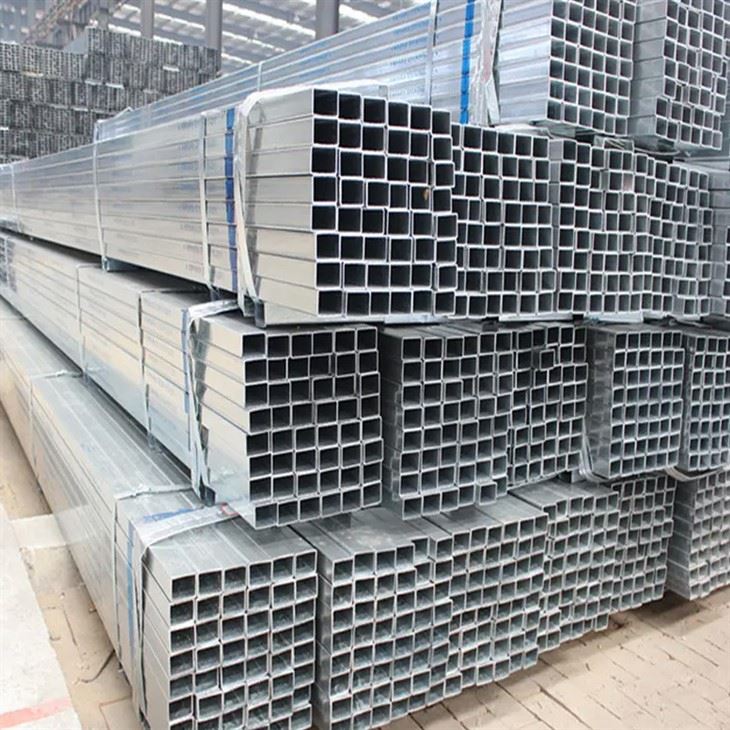
The word covers at least three different products and everybody in the chain knows it except the buyer. There is tube made from pre-galvanized strip, where the coil was coated before forming and only the weld seam and the corners get touched up after. There is tube galvanized after forming in a continuous line. And there is tube dipped in a bath of molten zinc as a finished piece, which is what most people picture when they hear the word. The zinc weight can run from roughly 60 grams per square metre on light pre-galvanized strip up to 275 or more on a proper hot-dip job, and the price difference between those two ends is real money on every tonne.
So when I get an inquiry that just says "galvanized square tube, best price," I have to guess. Some suppliers guess in their own favour. Write the coating into the inquiry itself: process, zinc weight, and the standard you want it judged against. Z275 to EN 10346 strip, or formed tube to EN 10219 with a coating minimum, whichever is what you actually need. If a quote comes back without a zinc weight on it, that absence is information too.
Treating the wall thickness on the quote as a promise of exactness
A buyer once told me his structural calculation needed 2.0 millimetres, so he ordered 2.0, and then measured 1.88 on arrival and thought he had been cheated. He had not. Tube is rolled to tolerances, and a minus ten per cent wall on a 2.0 millimetre order is normal mill output all over the world. The mistake was not in the mill. It was in a calculation that left no margin at all, written by someone who did not know the tolerance existed.
The fix is boring and takes one sentence. Ask what tolerance the thickness carries, then design to the bottom of it. If your frame genuinely cannot accept 1.8, order 2.3 or 2.5 and stop worrying. I have watched people burn days arguing over a caliper reading that was inside specification the whole time, because nobody asked the question before the order went in.
Not asking what grade of steel is actually inside the coating
Zinc hides the substrate, and a galvanized finish makes two very different tubes look identical. Under one of them is a mild structural grade around 235 megapascals yield. Under the other is a high-strength grade that yields around 350. Same size, same coating, same look, and a rack built from the wrong one sags in a way that no welding skill will fix afterwards. I had a mezzanine case where the customer's drawings said one thing, the tube delivered matched the quote, and the quote did not match the drawings. Nobody had checked the line where the grade was written. The repair meant cutting out the beams, and by then the container was six thousand kilometres away.
Grade, like coating, belongs in the written inquiry and the written quote. If your supplier cannot tell you the yield strength of the steel inside the tube, that is not a supplier for a structural order.
Saving two dollars on packing and risking the whole surface
The tube leaves my plant perfect. What happens to it over the next thirty days at sea depends heavily on how it was packed, and packing is the line item buyers most love to cut. Bare bundles strapped tight are the cheapest option and sometimes the right one, for short hauls and quick turnarounds. For a container crossing the equator, I push for woven wrap or paper between the layers, steel straps with protectors so the straps themselves do not bite the zinc, and desiccant bags hung inside. The upgrade costs a couple of dollars a bundle. White rust sitting between two tube faces for five weeks costs a claim, and even when the claim is settled, the buyer has spent his goodwill on something a roll of wrap would have prevented.
Say the word early, though. Packing decisions on our side get made when the order is entered, not when the container is stuffed, and "can you add wrap" asked two days before loading is how corners get cut quietly.
Ordering lengths that fight the container
Standard lengths are standard for a reason, and the common ones exist partly because they load well. Still, someone asks me every month for six-metre lengths in a quantity that lands just over one container, and then discovers the surplus, the freight per tonne on the odd half-load, and the storage problem at the other end, all in the same week. Before you fix the length, tell your supplier the project quantities and let them check the loading. Sometimes cutting to 5.8 metres turns an awkward two-container shipment into one clean one, and the offcut allowance is inside your cutting list anyway. Sometimes it is not, and the answer is simply to buy the full container. Either way, that decision is worth thirty seconds of arithmetic and almost nobody does it before the proforma is signed.
Never asking to see the goods before they sail
This last one costs nothing and prevents the most. I send pre-shipment photos to every first-order customer without being asked: the bundles stacked, the tags, the coating on a cut end, the packing inside the container before the doors close. Buyers who ask for them tend to be buyers who never file claims, and I do not think that is a coincidence. Looking at the goods keeps everybody careful, on both sides of the ocean.
If your supplier hesitates at that request, you have learned something more useful than any of the five mistakes above. The first order sets the pattern for the relationship. Make it a pattern where the specification is written down, the tolerances are named, the packing is agreed, and somebody photographs the steel before the doors shut. Every good long-term buyer I work with started out that way, usually because their first order went wrong and they decided it would be the last time.